Agriculture technologies - ebtiplc
1.NUTMEG (EBTI/Vanashree/MYF-312/ 1-10)
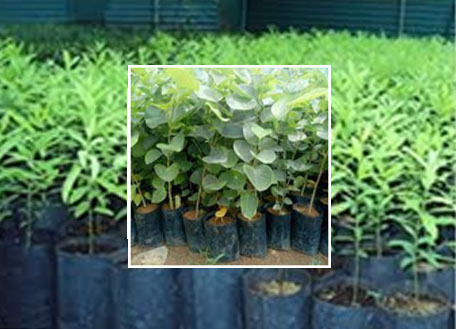
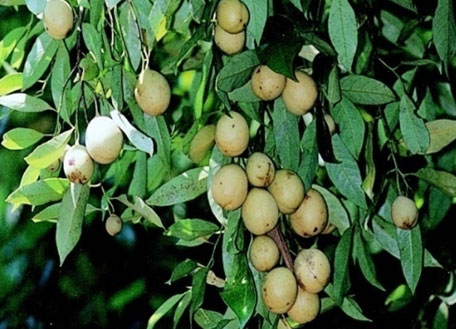
An accession of Nutmeg (EBTI/Vanashree/MYF-312/ 1-10) IC-537218 derived from an open pollinated seedling progeny of a high yielding tree was evaluated under a farmer participatory mode at three locations in two states, Kerala and Tamil Nadu.For yield characters 13 years and this accession was found superior for mace and our Nutmeg variety yield over the existing variety. The tree is a pure female which flowers profusely and bears oblong shaped yellow fruits. The aril is thick and covers the entire seed and is dark red in colour. The nut is bold and brownish black in colour. The mace and nut of the new variety is rich in sabinene.
2.VANILLA
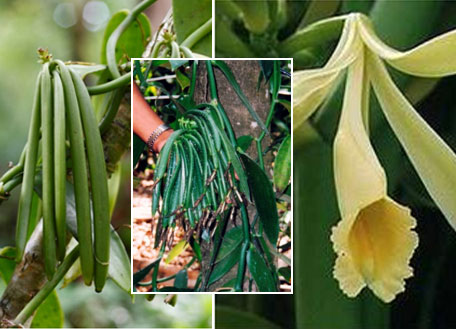
Vanilla can be grown under Coconuts and Arecanut or any other trees providing 50% filtered sunlight or under shade net. Vanilla requires support to climb. The plant requires shade to grow properly and too much sun will result in sun burns on the leaves. It is essential to provide shade and support to vanilla plants. There are many Species of Shade trees, the most preferred is Glyricidia.
3.PEPPER
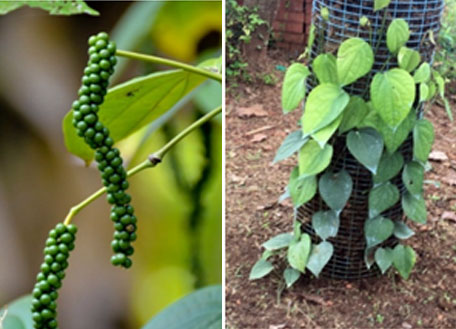
Black pepper (Piper nigrum)is a perennial climbing vine grown extensively for its berries used as spice and in medicine. One of the main factors responsible for the low productivity of black pepper in the country is cultivation of low yielding and unproductive vines. For increasing the black pepper production in the country, extensive new planting and replanting of senile and unproductive vines with high yielding varieties is essential. EBTI will provide technology on Rapid Multiplication of Black Pepper (RMP) a design where above high yielding selections of high quality planting material within the shortest time.
4.CARDAMOM
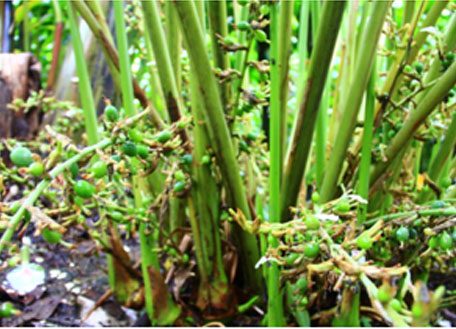
We ensure the availability of good quality planting materials of improved varieties/ cultivars for replanting/rejuvenation, High yielding and disease-free planting materials to facilitate replanting. Our cardamom plants mature in about 20 to 22 months after planting. Economic yield starts from third year of planting and it continues up to 8 to 12 years for high yielding varieties depending upon the level of management. We are having high yielding varieties of cardamom which yields 200 – 300 kg/ha.
5.TURMERIC
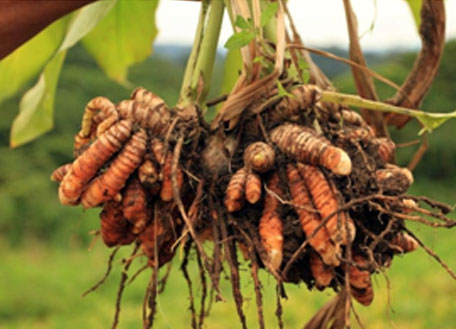
We provide whole, split mother and finger rhizomes for planting and well developed healthy, disease-free rhizomes. Our turmeric can be harvested within seven to nine months, depending on the variety and sowing time. Our varieties yield, Fresh rhizomes: 10 – 12 t/acre and Cured rhizomes: 2 – 2.5 t/acre. Seed rhizomes are generally stored after heaping under a higher ground in shade and plastered with mixed cow dung. Storage is also done in pits dug in earth and covered.
6.GINGER
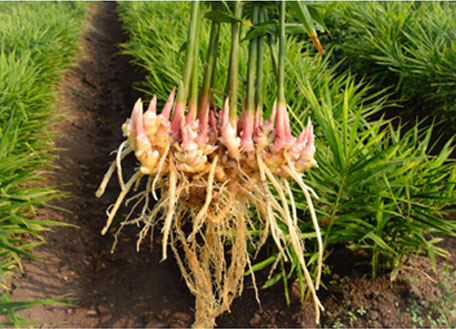
Ginger is propagated by seed tubers. We provide seed tubers that has 5.0 to 2.5 cm in length and weight of 20 to 25 grams that are used to make one or two viable nodes for propagation. Ginger attains full maturity in 210-240 days after planting. Harvesting of ginger for vegetable purpose starts after 180 days. The average yield of our variety: green ginger is estimated at about 6 to 10 tonnes per acre and 15 to 20 tons/ha of ginger rhizomes
7.GLOVE
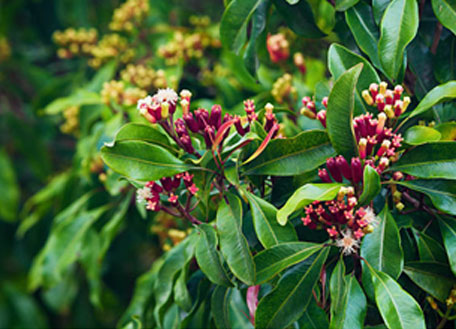
We provide seeds obtained from fully ripe fruits for raising seedlings. We collect fruits for seed collection, known popularly as “mother of clove’ that are allowed to ripe on the tree and drop down naturally. Our clove tree varieties start flowering from the fourth year of planting in fertile soil and sound management conditions. However, the full bearing stage is reached by about the 15th years only. Flower buds are produced on young flush and it takes about 4-6 months for the buds to become ready for harvest. Clove cultivation of our variety in 1 acre yields approximately about 15-20 tons of dried cloves.
8.ALL SPICES
Allspice botanically known as Pimentadioica from the Myrtaceae family. Other common names are Jamaica pepper, myrtle pepper, pimento. It is known as Allspice because it gives the combined flavors of Cinnamon, Nutmeg and Clove. It is an evergreen medium size tree and known for its whitish-gray bark that peels in thin sheets, & dried unripe berry. The leaves are large, leathery, glossy green, aromatic, and quite attractive. Fresh leaves are similar in texture to bay leaves and similarly used in cooking. The fruits are picked when green and unripe and are traditionally dried in the sun. When dry they are brown and resemble large, smooth peppercorns. Leaves and wood are often used as a spice in mainly local growing areas.
EBTI makes available of planting material that can reach up to 8 meters height.Flowering starts during the monsoon season. The planting material purchased from us, will start fruiting after 3-4 years of planting. But leaves can be used as a spice after 1 year. We also provide the crop-specific organic fertilizer that should be supplemented once in 3 months. A yield of 20 – 25 kg dry berries per year/ tree will be available.
9.MANGO
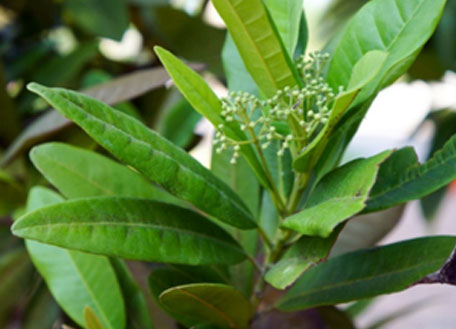
We supply high yielding commercial varieties of Neelum, Mulgoa, Bangalora and Alphonso. Mango grafts need adequate manuring right from the first year that are customized by us. Graft plants acquired from us starts bearing at the age of 3 – 4 years to give optimum crop from 10-15th year which continues to increase upto the age of 40 years under good management. An average yield of 8 – 10 t/ha upto 15 years and 15 – 20 t/ha from 15 – 20 yearswould be standard.
10.MORINGA
Moringa is a genus of shrubs and trees with multi-purpose uses: its leaves, roots and immature pods are consumed as a vegetable. All parts of the moringa tree – bark, pods, leaves, nuts, seeds, tubers, roots, and flowers – are edible. The leaves are used fresh or dried and ground into powder. The seed pods are picked while still green and eaten fresh or cooked. Moringa seed oil is sweet, non-sticking, non-drying and resists rancidity, while the cake from seed is used to purify drinking water. The seeds are also be eaten green, roasted, powdered and steeped for tea or used in curries.
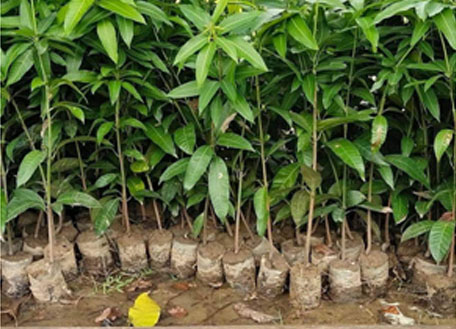
We supply various kinds of moringa varieties that has high commercial importance. Moringa does not require a lot of fertilizers. Basic nutrients are just about enough for its survival. The application of EBTI – Biofertilizers could be beneficial to increase the weight of the pods or foliage when necessary. Harvesting starts 4th month after transplanting which yields 50 – 55 tonnes of pods/ha (220 pods/tree/year).
11.AGARWOOD
The most valuable tree in the world The best species in producing oud oil
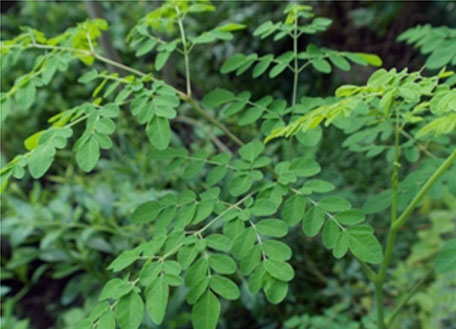
is ‘Aquilaria malaccensis’. Agarwood is one of the most precious, rare and certainly most expensive essential oils in existence today. Agarwood is sometimes called Aloes wood. The essential oil is derived from the heartwood of the Agarwood tree. Medical benefits of leaves help reduce diabetes & stress, cure asthma and allergies, seed oil can cure dermatologic problems, etc. EBTI developedstandard techniques of plant tissue and cell culture techniques. As well as Our EBTI R&D formulated microbial consortia that can be used as fungal inoculants for Agarwood induction in Aquilaria species. The effectiveness of formulated microbial consortia creates infection after a three and six monthsinoculation periods.
12.RED SANDAL WOOD PLANTS
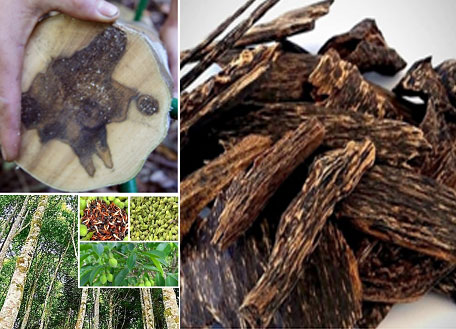
We cultivate High yielding Red Sandal Seedlingsand supply all over India. The heartwood is a useful part of plant and is extremely hard, blood red in colour with occasional light-yellow streaks.The yield of oil varies from 1.5-2.0 percent. The reddish or brown bark can be almost black and is smooth in young trees, becoming cracked with a red reveal. The heartwood is pale green to white as the common name indicates. The oval leaves are thin, oppositely arranged. Smooth surface is shiny and bright green, with a glaucous pale underside. Sandal tree starts flowering from 3rd or 4th year and flowering season generally lasts from February to April while fruiting takes place between July to October.
Sandalwood is the second-most expensive wood in the world and also plant’s heartwood is having high medicinal values. Both wood and oil produce distinctive fragrance valued from centuries.The essential oil has very high value due to its use in cosmetics, perfumery, and soap industry.
13.WHITE SANDAL WOOD PLANTS
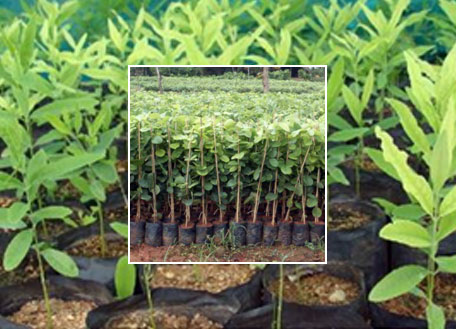
We sale seedlings of Sandalwood ages from 4 months Sandalwood. Santalum album or Indian sandalwood is a small tropical tree, the most commonly known source of sandalwood.is a class of woods from trees in the genus Santalum, family Santalaceae. The group is distributed throughout southeastern Asia, Australia, and islands of the South Pacific.White Sandalwood Plant is an evergreen tree. Santalum album is a slow-growing tree that can reach heights of up to 12-15 feet. The leaves are glossy and dark green, and the small white flowers have a sweet fragrance. The tree produces small red or orange berries that are edible but not commonly consumed.